
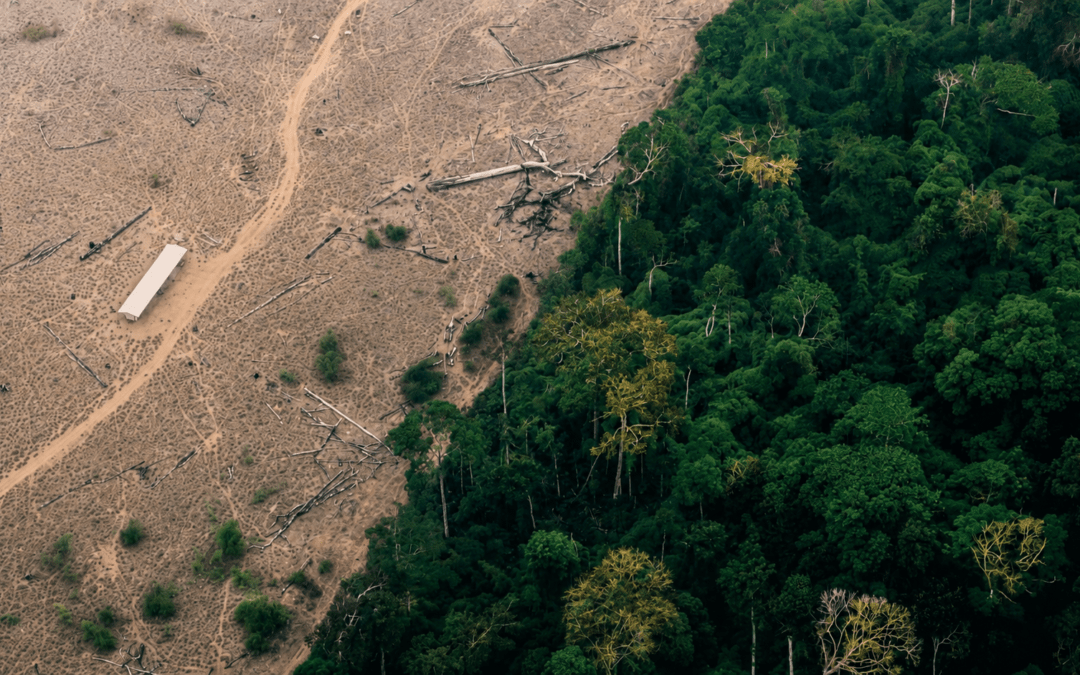
Why the Conservation Sector Is Failing…
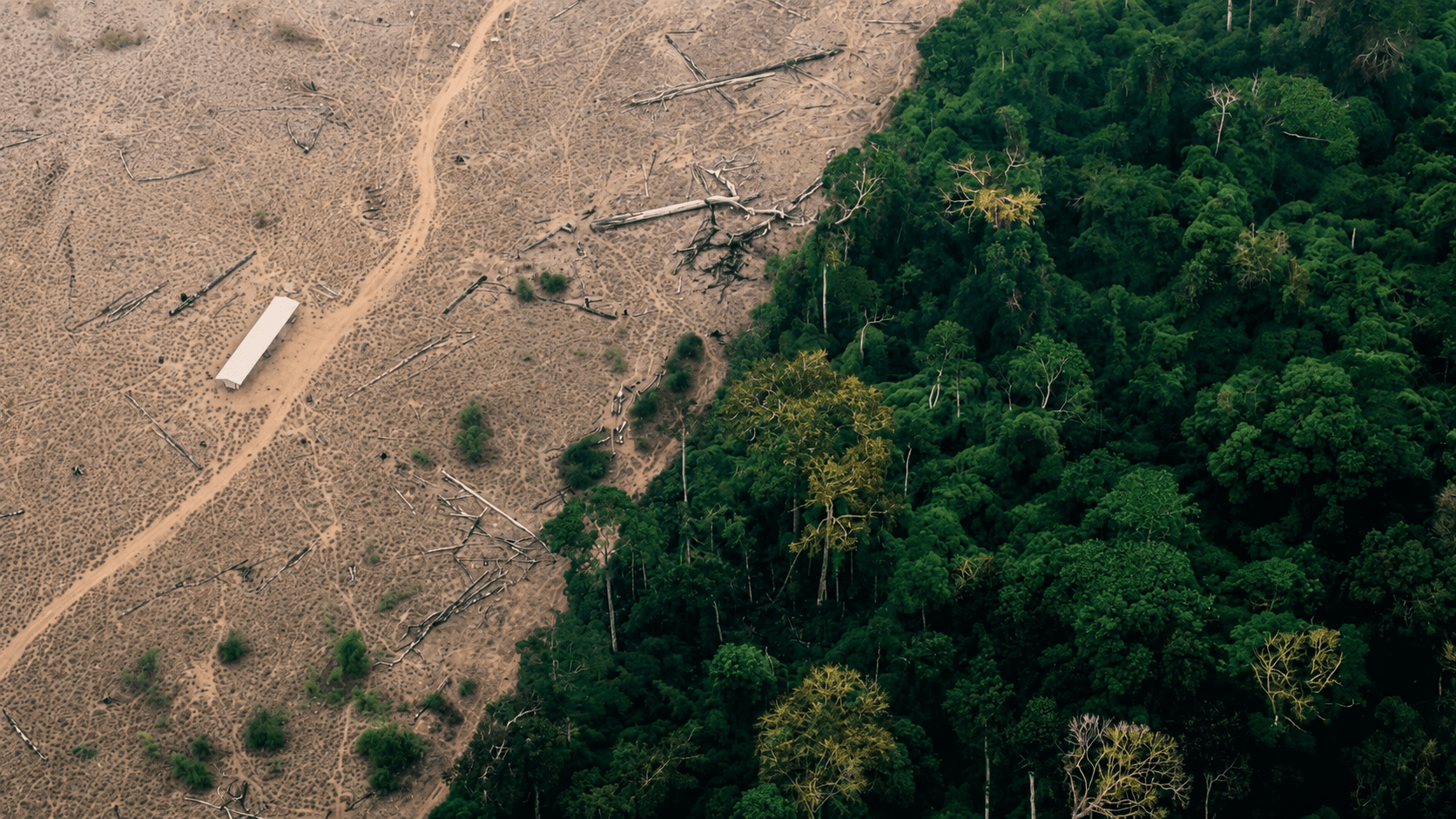
…and what must be done to change that.
It’s easy to point the finger to external issues, but I’m about to take aim at the very field I’ve spent my career trying to support, because it needs to be said.
Everyone in the conservation sector can rattle off the drivers of biodiversity decline. Habitat loss. Over-exploitation. Invasive species. yada yada. We’ve known this for decades.
But here’s what I genuinely believe: there is very little understanding and acceptance of what will actually drive biodiversity recovery. And that’s because the answers are uncomfortable for the people within our own sector.
The conservation community is not responsible for biodiversity decline. But we are responsible for the lack of recovery. And until we confront three deeply entrenched problems in how we operate, that isn’t going to change.
1. Adaptive Management Is the Bare Minimum, and We’re Barely Doing It
Adaptive management is the structured cycle of planning, implementing, monitoring, evaluating, and adjusting. It is considered the gold standard for managing complex systems under uncertainty. And it’s not a novel concept. Its roots trace back to the 1800s when the medical field began practicing iterative, evidence-based decision-making. In conservation, it gained formal recognition through Holling’s seminal work in the 1970s.
And yet, as a field, we are failing to implement it at any meaningful scale.
A structured review in Environmental Conservation found that actual implementation of adaptive management remains rare, with documented failure rates running high (Rae et al., 2013). A review published in Biological Conservation put it even more bluntly: adaptive management has “only rarely succeeded in improving biodiversity outcomes” (Westgate et al., 2013). The concept has become, as one group of researchers described it, “constantly advocated but, in reality, seldom implemented properly” (Canessa et al., 2019).
If those papers feel out of date, let me add that from my own experience working with more than 400 conservation organizations around the world, I can confidently say that not much has changed.
Why?
Partly because many organizations believe they are already doing adaptive management when they’re simply “monitoring” without any structured feedback loop. And partly because genuine adaptive planning requires the kind of rigorous, honest self-assessment that most organizations find deeply uncomfortable.
And that’s because most organizations want to avoid being held accountable to measurable impact. This is ultimately a leadership problem.
Adaptive management forces us to acknowledge when things aren’t working. It demands that we look at results, admit failures, and change course. For many individuals in a decision-making role (dare I say most?), ambiguity is comfort. If you never measure whether your strategy is working, you never have to confront the possibility that it isn’t.
Without adaptive planning, we cannot generate evidence about what is working and what isn’t. We are flying blind and making decisions based on what feels good rather than on evidence. And yet, this is the bare minimum for any credible attempt at biodiversity recovery.
2. The Funding Model Is Broken
Ask any conservation professional what they need to be more effective and you’ll hear the same answer: more money.
But how much of the current money is being spent effectively?
Consider “education and awareness” programming, one of the most common line items in conservation budgets worldwide. Evidence consistently shows that raising awareness is, on its own, almost never sufficient to change human behavior.
In fact, decades of research in behavioral economics, neuroscience, cognitive psychology, and social psychology have clearly shown the opposite: awareness does not translate into action.
Yet millions of dollars continue to be poured into awareness programs and campaigns because they “feel good”. No theory of change. No behavioral frameworks. No measurable behavioral outcomes. They achieve nothing because they are not grounded in how human behavior change actually works.
As a recent Mongabay analysis concluded that the conservation sector risks spending scarce funds on “well-intentioned but ineffective efforts” without stronger causal evidence of impact.
The current funding model rewards projects that tell a compelling story, not because it demonstrates a credible pathway to impact. That’s simply irresponsible.
Funders need to tie funding to actual outcomes. And grantees need to welcome that accountability, not resist it.
3. The Cult of Science Needs a Cultural Shift
This will be the most contentious point, so let me be clear: I am not anti-science. Science is foundational to conservation.
But there is a cultural problem within the scientific community that is holding us back.
Success in conservation science is still overwhelmingly measured by publications. Papers published. Impact factors. Citation counts. Career advancement is built on academic output, not on whether your research actually improved management effectiveness or contributed to biodiversity recovery on the ground.
This creates a perverse incentive structure. Researchers are rewarded for producing knowledge, not for producing useful knowledge. The result is a growing body of ecological literature and global-scale analyses that, while novel and therefore suited for publication, is completely and utterly disconnected from the people making management decisions on the ground and from the outcomes those decisions are supposed to achieve.
We need a cultural shift.
The measure of success for conservation science should not be how many articles you publish. It should be whether your research improved management effectiveness. Whether it helped practitioners make better decisions. Whether it contributed, demonstrably, to better outcomes for nature.
So What Now?
None of this is easy to hear. I know that. And I’m not pointing fingers from the outside. I’ve worked in this sector long enough to know how deeply these patterns are entrenched, and how hard they are to change.
But the trajectory we’re on is not working.
The battle against the decline of nature is already being lost. Not because we lack passion, or because we don’t care, but because we have systemic problems in how we plan, how we fund, and how we measure success.
Until the conservation community adopts these three ingredients at scale, biodiversity recovery will continue being a pipe dream and the burnout and despair in our sector will only get worse.
If you’ve read this far, please advocate for:
Adaptive planning and management as the non-negotiable foundation, with genuine evidence generation about what works and what doesn’t. Projects and programs can only generate that evidence by design – not as an afterthought.
Funding tied to measurable outcomes, with clear theories of change, behavioral science informing strategy design, and accountability for results. No one deserves a dollar if they can’t define success and actually measure whether it’s being achieved (or not).
A scientific culture that measures success by management impact, not by publication count. We don’t need more papers answering questions that no one asked except the authors. We need applied science to answer the basic questions about project- and program-specific management effectiveness.
The conservation sector has extraordinary people doing extraordinary work. But extraordinary effort without strategic rigour is not enough. We owe it to the biodiversity we’re trying to save to be honest about what needs to change.
What do you think? Am I off base, or does this resonate with what you’re seeing in your work?
References
Butler, R.A. (2026). Measuring what works in conservation. Mongabay. Online.
Canessa et al. (2019). “Adaptive management of species recovery programs: A real-world application for an endangered amphibian.” Biological Conservation.
Rae et al. (2013). “Adaptive management: where are we now?” Environmental Conservation, 40(1).
Sherley et al. (2022). “What is the Price of Conservation?” BioScience, 72(5).
Westgate et al. (2013). “Adaptive management of biological systems: A review.” Biological Conservation.